
The best free portrait reference photos come from Unsplash, Pexels, Pixabay, Wikimedia Commons, and artist-curated collections like Art Prof. Before you download anything, run a quick check: is the pose readable, is the lighting clear, is the resolution high enough, are the features uncropped, and is the license safe for your intended use? Pick your reference type based on what you're practicing, not just what looks appealing.
TL;DR:
- Use uncropped, high-resolution photos with clear lighting and readable facial features, avoiding heavily filtered or low-quality images for accurate studies.
- Focus on pose variety, including front, three-quarter, and profile views, to build a well-rounded understanding of anatomy and foreshortening.
- Select references that match your study goal, such as lighting focuses for value work or feature crops for texture detail, to optimize practice efficiency.
- Verify licensing restrictions before commercial use, especially with stock photos, and prefer museum or artist-curated sources for public domain or practice-friendly images.
- Build a diverse reference library by combining different categories, including head-and-shoulders, full figures, and lighting studies, for comprehensive skill development.
Table of Contents
- 1. Where to find high-quality free portrait reference photos
- 2. What makes a good portrait reference photo for drawing and painting
- 3. Types of portrait reference photos and how to use each in a practice set
- 4. A practical workflow for choosing the right reference photo for a study
- 5. Licensing and rights checklist before publishing or selling your work
- 7. Why I curate references this way
- 8. Ready-made reference packs and guided lessons from Brittany Clare Art
- Sources
- FAQ
1. Where to find high-quality free portrait reference photos
Not every photo labeled "portrait" is useful for drawing. Marketing photography favors flattering angles and heavy retouching, which hides the exact information you need: skin texture, honest shadow edges, and anatomical landmarks. Artist-curated collections solve this. The Art Prof reference photo collection is custom-shot with artists in mind rather than for advertising, so images arrive uncropped, in multiple angles, and with color that hasn't been pushed for style. That kind of shooting reduces the guesswork you'd otherwise face when trying to figure out where a jaw actually ends or how a shadow really falls.
The major free stock libraries fill in volume and variety. Unsplash, Pexels, and Pixabay each host a large number of portrait images across ages, ethnicities, and lighting setups, which matters if you're trying to build a varied practice library rather than draw the same faces repeatedly.
Museum archives offer something different: historical accuracy and, in many cases, public-domain clearance. Institutions like the Smithsonian's National Portrait Gallery and Wikimedia Commons host portrait records useful for studying composition, costume, and stylization, alongside photographs suited to anatomy and skin study.
For inspiration and pose variety beyond straight stock photography, artists often turn to dedicated pose reference sites, Pinterest boards, and niche resources like AdorkaStock, which cater specifically to figure and expression study rather than general photography needs.
A few licensing notes are worth knowing upfront:
- Unsplash and Pexels allow broad free use, but Unsplash's own guidance on releases and trademarks recommends checking publicity and property rights before commercial use.
- Pexels states its license permits free download, modification, and commercial use without required attribution.
- Pixabay operates on a similarly permissive model, though individual image terms can vary.
- Wikimedia Commons and museum records often include CC0 or clearly licensed items, but each one needs its rights statement checked individually.
- Artist-curated sites like Art Prof are typically built for educational and practice use, which simplifies the licensing question for personal study.
2. What makes a good portrait reference photo for drawing and painting
A useful reference photo gives you enough visual information to build the head accurately before you ever touch shading or texture. According to Art Prof's reference guidance, a strong reference has a readable pose, clear facial planes, useful lighting, sufficient resolution, and enough surrounding context to understand how the head is oriented in space.
Pose and head orientation come first. A reference where the chin, ear, and cheekbone are all clearly visible teaches you far more than one where the angle hides half the face. Practicing with a mix of front, three-quarter, and profile views trains your eye to handle whatever angle a future subject or commission throws at you.
Lighting and value pattern matter just as much as pose. Soft frontal light is easier for beginners learning basic planes and proportions, while directional or Rembrandt-style lighting teaches value grouping and how form reads under contrast, a distinction confirmed by Art Prof's own categorization of useful lighting types for study.
Statistic Callout: According to Art Prof, the most useful reference categories combine front, three-quarter, and profile views with neutral, smiling, compressed, and asymmetrical expressions paired with soft frontal or directional lighting. That range covers most of what a portrait artist needs to build a well-rounded practice set.

Resolution and uncropped anatomy round out the checklist. A low-resolution image forces you to invent detail that isn't there, and a tightly cropped photo can cut off the ear, jaw, or neck exactly where you needed that information most.
A short list of pitfalls to watch for:
- Blurry or low-resolution files hide the fine transitions in skin and hair that realistic work depends on.
- Heavily filtered or retouched photos smooth away the texture you're trying to learn to render.
- Overly compressed images introduce artifacts that look like real detail but aren't.
Expression choice depends on your goal: neutral expressions are better for proportion and structure studies, while expressive references sharpen your understanding of how muscles shift the face under emotion.
3. Types of portrait reference photos and how to use each in a practice set
A balanced practice library draws from several categories, a point echoed in Expert Photography's breakdown of portrait types, which notes that a productive set mixes categories rather than repeating the same polished beauty shot.
- Head-and-shoulders references are the workhorse of proportion practice. They show the full head and the transition into the neck and shoulders, which is exactly what you need to nail basic facial mapping.
- Three-quarter views push you into foreshortening and volume. The far side of the face compresses visually, forcing you to think in three dimensions instead of tracing flat shapes.
- Profile references isolate the silhouette. They're the best way to study the ear, the jawline, and how the nose bridge actually projects from the face.
- Full-figure and pose references show how the neck connects to the shoulders and torso, information that head-and-shoulders crops simply leave out.
- Lighting studies group values under strong directional light, ideal for practicing shadow shapes and contrast before you worry about fine detail.
- Feature crops zoom into eyes, nose, mouth, or a patch of skin, letting you isolate texture and small-scale form without the distraction of the whole face.
Building a set that includes all six types means you're never stuck practicing the same skill twice while neglecting another.
4. A practical workflow for choosing the right reference photo for a study
Picking a reference shouldn't take longer than the study itself. Here's a repeatable process:
- State your study goal first. Decide whether you're working on proportion, lighting and value, or texture and detail before you open a single browser tab.
- Filter by pose and angle. If your goal is foreshortening, skip straight-on shots and look specifically for three-quarter views.
- Inspect the light direction and shadow edges. Soft, wide shadows suit beginners; hard-edged, directional shadows are better for advanced value grouping, a distinction laid out in The Lens Lounge's guide to light direction.
- Check resolution and crop. Make sure the ear, jaw, and neck are visible and that the file is sharp enough to show real texture, not compression noise.
- Confirm the license. Match the platform's terms to your intended use, especially if the finished piece will be sold or published commercially.
Pro Tip: Pair a strong lighting-study reference with a close feature crop of the same subject so you can practice value grouping and skin texture in the same session without losing proportion context.
Run through those five points in about a minute and you'll avoid the common trap of picking a pretty photo that turns out to be useless once you start drawing.
5. Licensing and rights checklist before publishing or selling your work
Free doesn't always mean fully cleared, and that distinction matters most once you plan to publish or sell a piece. Unsplash's own help center guidance states plainly that while contributors grant broad licenses, publicity, privacy, and property rights can still apply, and it recommends verifying releases before commercial use.
- Compare platform terms. Pexels explicitly allows modification and commercial use without required attribution, while Unsplash advises checking model and property releases separately.
- Watch for recognizable people. If a face is identifiable and the piece is for sale, a release may be required depending on your market and use case.
- Check for trademarks and property in frame. Logos, artwork, or branded items visible in a reference photo can carry separate restrictions.
- Keep records. Save the image's item page and license text, and message the contributor when possible to confirm any claimed release.
- When in doubt, go safer. Re-shoot your own reference, use a CC0 museum image, or commission a model directly.
Statistic Callout: Unsplash's own guidance confirms that "free" licensing is not a single legal state: privacy, publicity, and property-in-frame rights still apply separately from the download terms. That single sentence is worth remembering every time you consider selling a piece made from a stock photo.
7. Why I curate references this way
I choose references the same way I teach: structure before detail, always. A photo that shows clear planes and honest light lets you build the head correctly before texture ever enters the conversation, and that stepwise habit is exactly what my tutorials are built around. If you want to feel the difference, pick one soft-lit portrait and one high-contrast one, then block in both before adding a single line of detail.
— Brittany
8. Ready-made reference packs and guided lessons from Brittany Clare Art
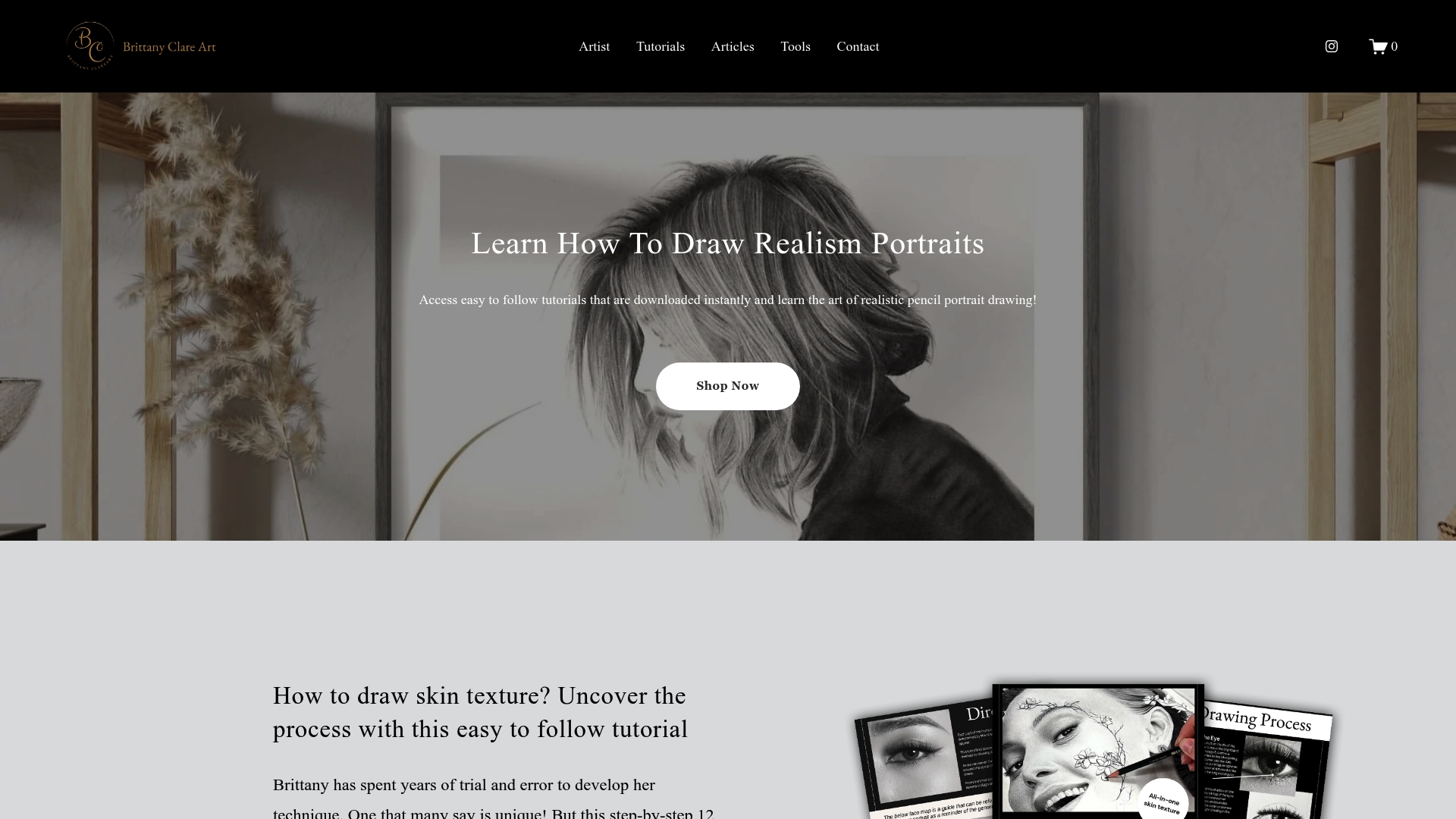
If hunting across multiple stock sites and checking license pages for every image sounds like more friction than you want, my Digital Downloads collection gives you high-resolution crops, lighting variants, and printable formats already organized for study, without the licensing guesswork. Pair a pack with a structured lesson from my step-by-step drawing course and you move from picking a photo to building real skin, hair, and feature accuracy in the same sitting.
Structure first, detail second, every single time.
Browse the Digital Downloads shop to get a reference pack built for exactly this kind of practice.
Sources
No, references don't need to be strictly photorealistic. Historical portrait paintings and museum records are useful for composition, costume, and stylization, while clear photographs remain the better choice for studying anatomy and skin texture, according to National Gallery and Wikimedia Commons guidance.
- Art Prof Reference Photo Collection · Art Prof
- Free Stock Photo & Video License - Pexels
- Releases and trademarks | Unsplash Help Center
- Direction of light / The Lens Lounge
FAQ
Can you use photos as portrait references?
Yes, photographs are one of the most common and reliable reference types for portrait drawing and painting. Museum records, paintings, and other artwork can also serve as references depending on your learning goal, though clear photographs work best for anatomy and skin observation, according to National Gallery and Wikimedia Commons guidance.
What makes a good portrait reference photo?
A good reference has a readable pose, clear facial planes, useful lighting, sufficient resolution, and uncropped features so you can see the full head orientation, per Art Prof's reference guidance. Blurry, heavily filtered, or tightly cropped images should be avoided since they hide the detail you need most.
What are the different types of reference photos?
The main categories include head-and-shoulders, three-quarter, profile, full-figure, lighting studies, and feature crops, each teaching a different skill from proportion to value grouping, as outlined by Expert Photography. A balanced practice set mixes several types rather than repeating one polished angle.